Your handicap, calculated by the official WHS rules.
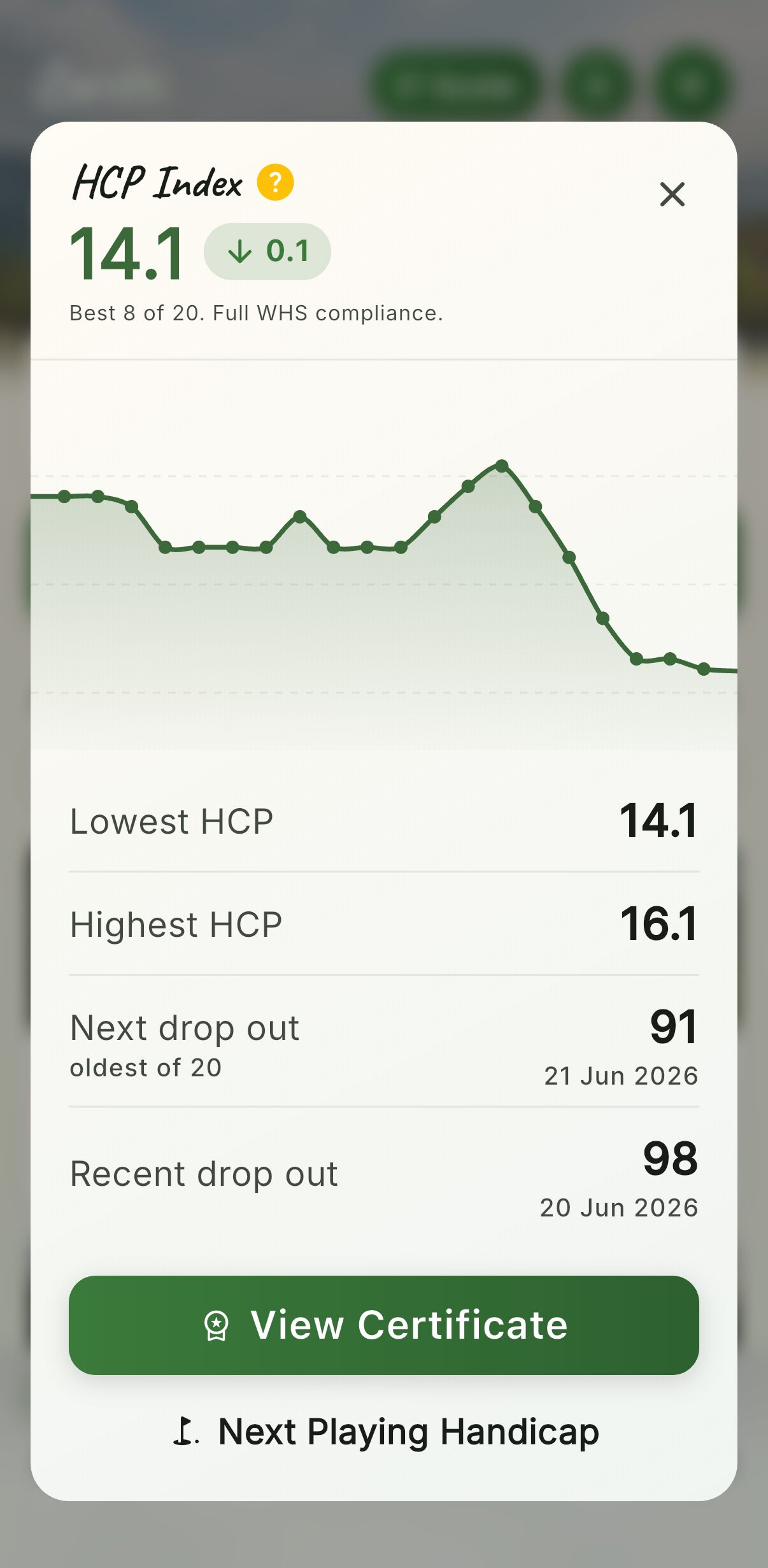
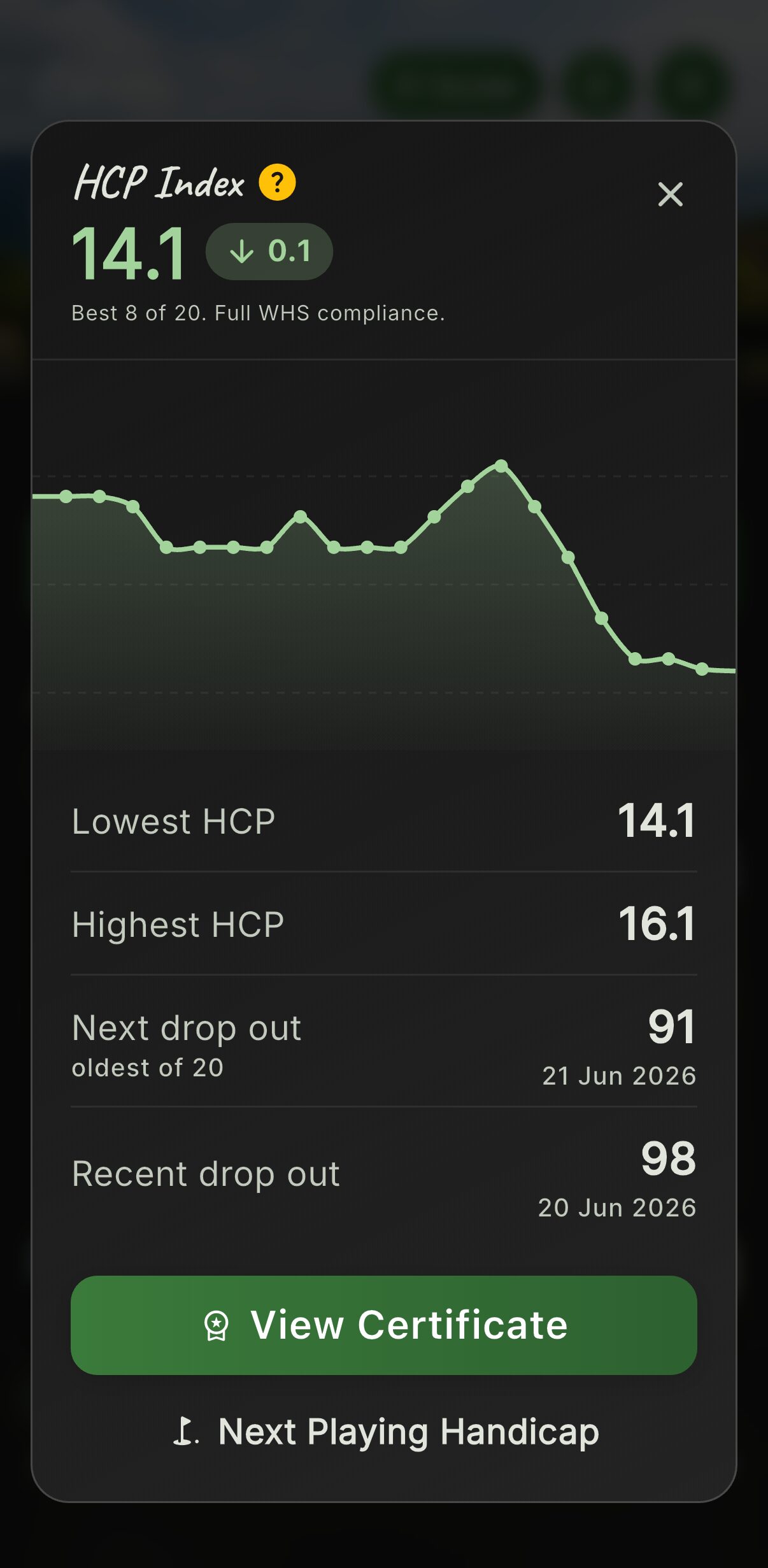
We took the World Handicap System rulebook and applied all of it, strictly: score differentials, net double bogey, the playing conditions calculation, best 8 of the last 20. Cardie™ shows why your index moved and which round drops out next.
The best 8 countThe other 12 don't

We do the complex math for you.
How your index is worked out
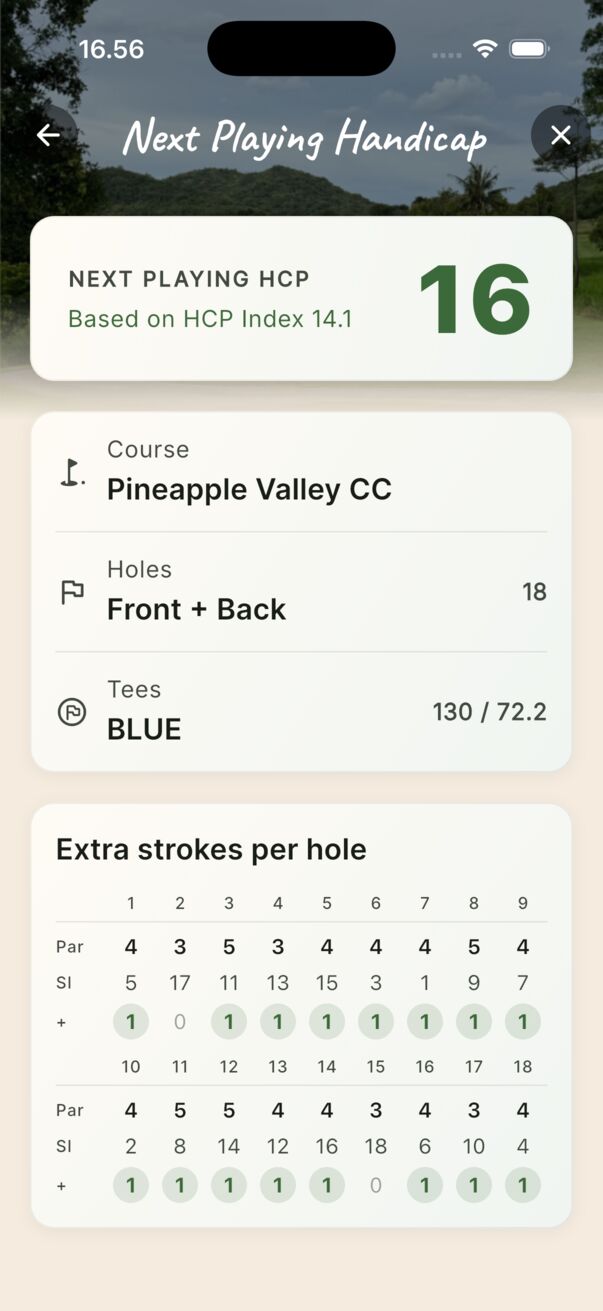
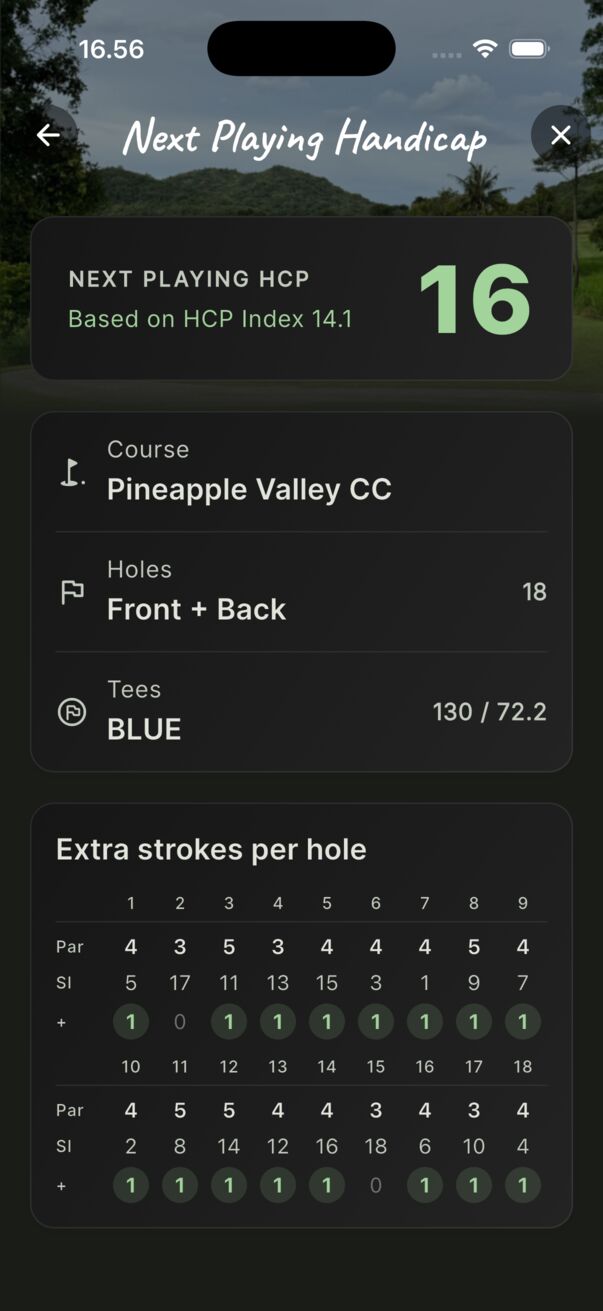
Your playing handicap
Your index, the course and the tees give the strokes you get on each hole: index times slope over 113, plus rating minus par. Those strokes set how much each hole can count.
Save a round
A round counts for your handicap when it's 9 or 18 holes, played from a set of tees, with Stats & HCP switched on.
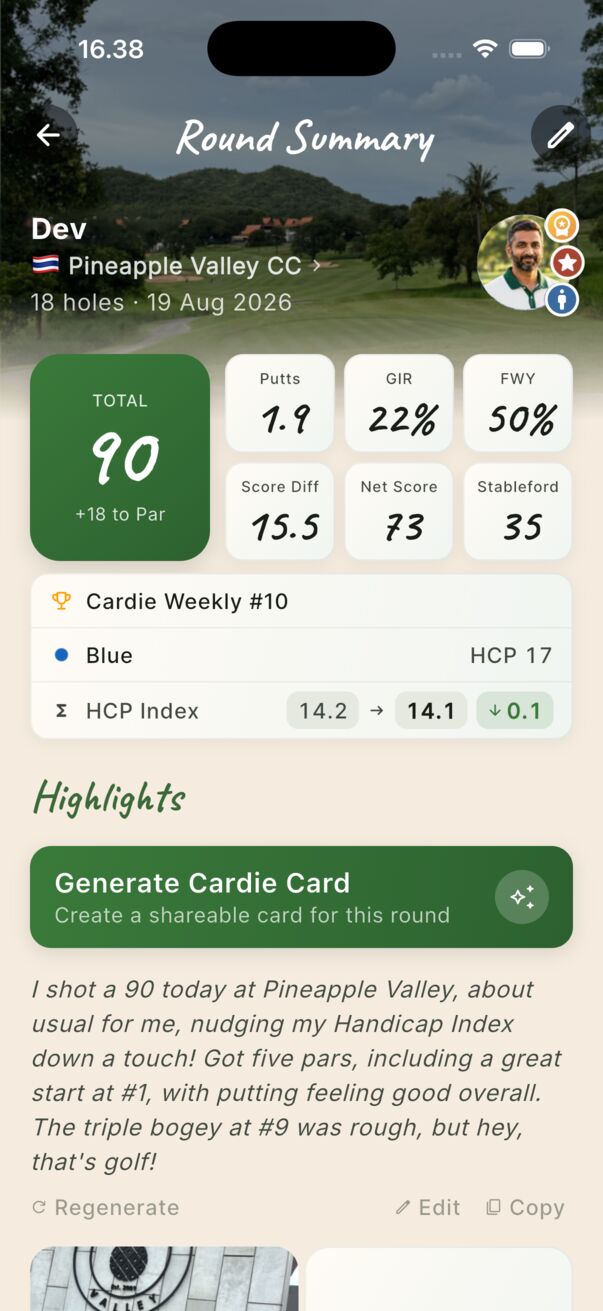
Each hole is capped
A bad hole counts as net double bogey at most: par, plus two, plus the strokes you get on that hole.
Hole 9, capped
- Par
- 4
- Strokes you get
- 1
- Most it can count
- 4 + 2 + 1 = 7
- You wrote
- 9
Counts as7
Your score differential
Your adjusted score, measured against the rating and slope of the tees you played. For nine holes, an expected score for the other nine is added, as the WHS rules say.
Score differential
- Adjusted score
- 89
- Course rating
- 72.2
- Slope
- 130
(113 ÷ 130) × (89 − 72.2)
Differential14.6
Limits on big moves
An exceptional round brings your index down further. A run of bad ones can only push it so far above your lowest index of the last year.
Limits on big moves
- Exceptional score7 or more below your index takes off 1 more. 10 or more takes off 2.
- Soft capMore than 3 above your lowest index of the last year: only half the rise counts.
- Hard capNever more than 5 above it.
Best 8 of your last 20
Your index is the average of your 8 best differentials from your last 20 rounds. With fewer rounds, fewer count, from 3 rounds up.
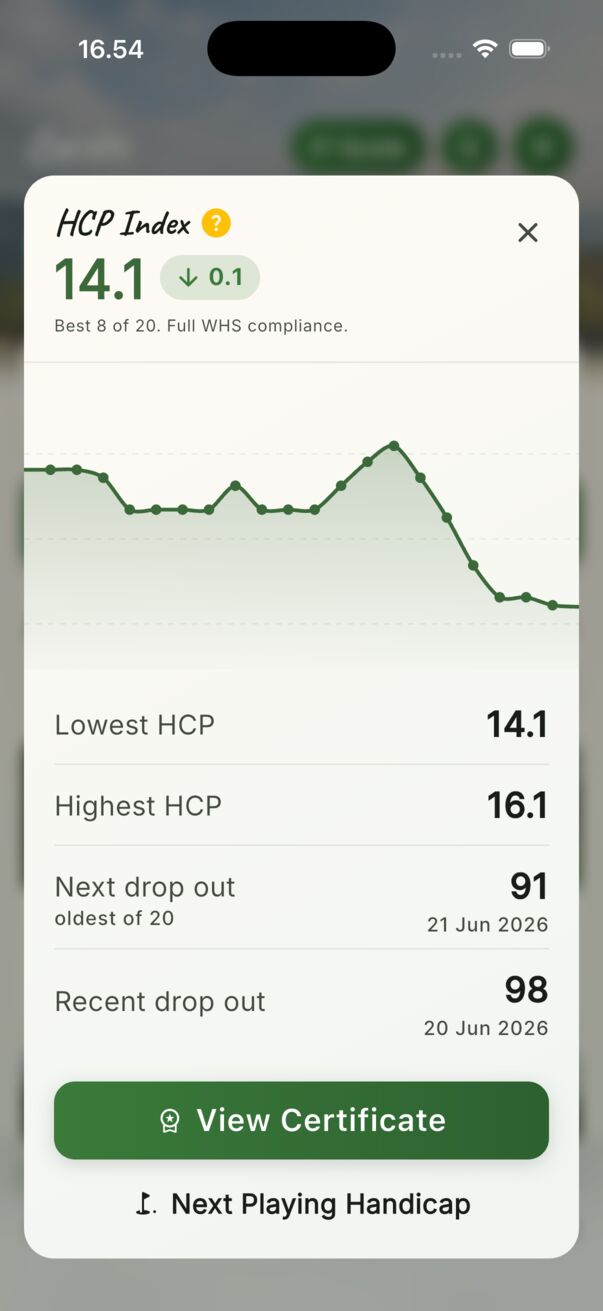
Your handicap, explained
Your 90 at Pineapple Valley was a 15.5 differential, better than the 16.0 it replaced in your best 8. Your index went from 14.2 to 14.1. Next to drop out is a 13.8 from May.
Before the round, and after
Your playing handicap on any course
Pick the course and tees before you play, and see the strokes you get on each hole.
Your playing partner's too
Check it for whoever you're playing with, so you agree on the strokes before the first tee.
Your handicap, explained
Ask Cardie™ to explain it at any time: what moved your index, and which round drops out next.